
Breathing with Trees
Breaths of the Earth (part 1), Meditation, & Creative Prompt

Dear Fellow Human,
As always, I invite you to consider that complex question of how you are in this never-to-be-repeated moment. While I hope that you are well, I welcome every layer of you, feeling every which way it might feel. I welcome you in all of your centripetally humming humanness.
Fellow Human, I am humming, and I wonder if you will hum with me. The Etymological dictionary tells us that the word hum initially meant to make a sound to cover up an embarrassment, which I can only guess is—the passing of gas out from one’s rear end. What a humble origin of the word hum. Truly, it is humbling to be human.
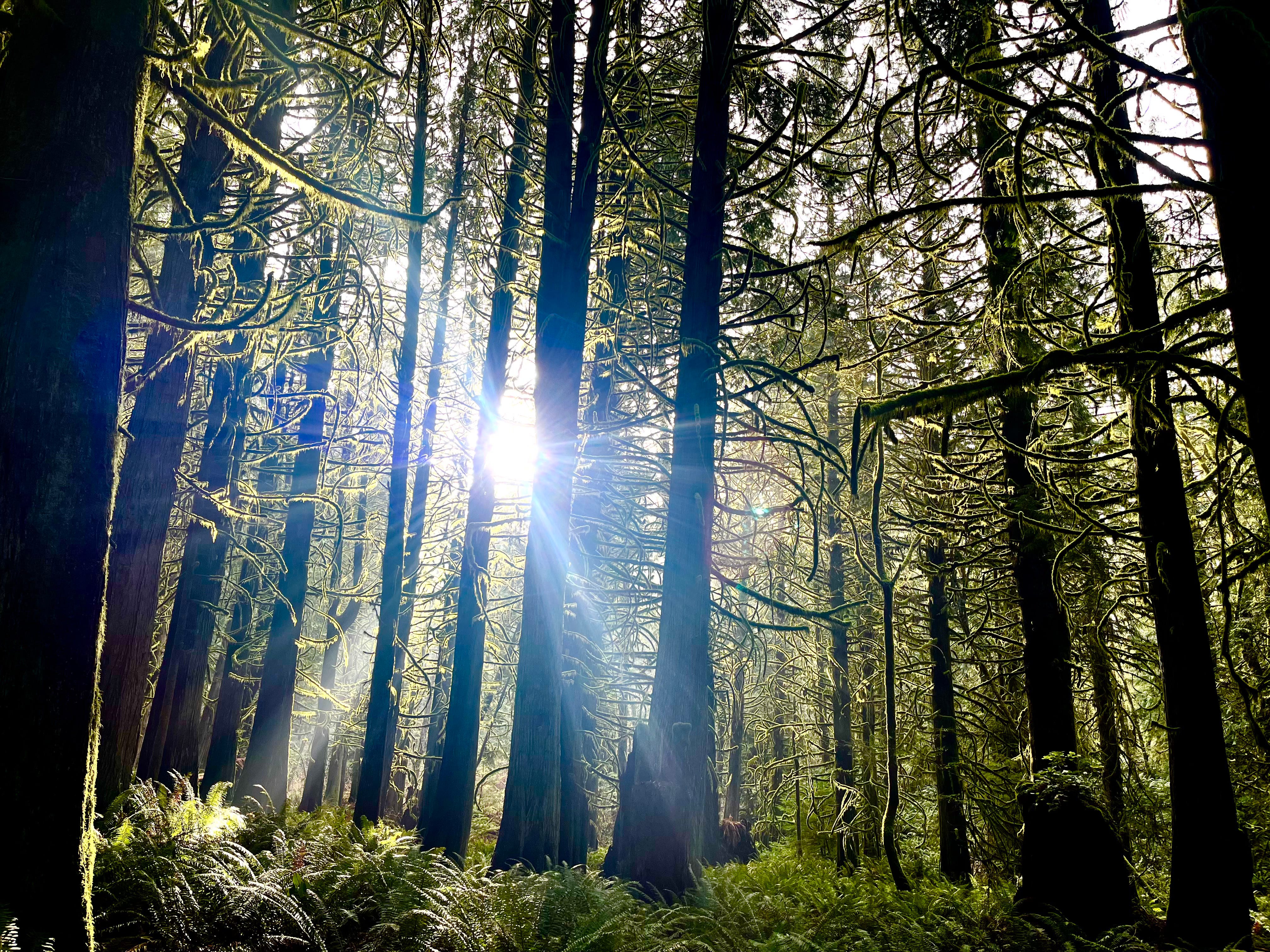
Fellow Human, do you, like me, sometimes look wistfully at trees—standing in their noble, wind-swaying rootedness, standing in their sun-reaching and earth-weaving growth, standing through all seasons and weather and levels of pollution, standing as home, food, and shelter for birds and squirrels and beetles and grubs and fungi and humans, standing just as they are through whatever life brings them?
Do you, like me, ever look at trees and wish you could be more like them? And in those moments, is it because you, like me, feel a little embarrassed to be human?
At least we can hum. And when we hum, we stimulate our vagus nerve, which then lights up our parasympathetic nervous system. And thus, our breath regulates, our heart and other muscles relax, and we calm down. And this then leads to wiser and more compassionate decisions, which of course benefits everyone. Fellow Human, will you take a moment to hum with me—perhaps just a single note, very quietly so no one can hear you? Or maybe you’ve got a whole melody of woes and worries and owies that need to hum their way out. Try it:
Inhale, and feel your diaphragm sink down into your belly as your lungs fill with air.
Then close your lips, let the tip of your tongue rest on the front of the roof of your mouth, and then exhale while letting your vocal cords vibrate.
As the air and sound vibrations emit from your body, feel your diaphragm balloon back out of your belly and up towards your lungs and heart.
Now notice: Was that enough, or do you a sense an urge to continue?
Or do you sense an urge to continue concurring with an urge to hold back?
Which inner voice will you follow?
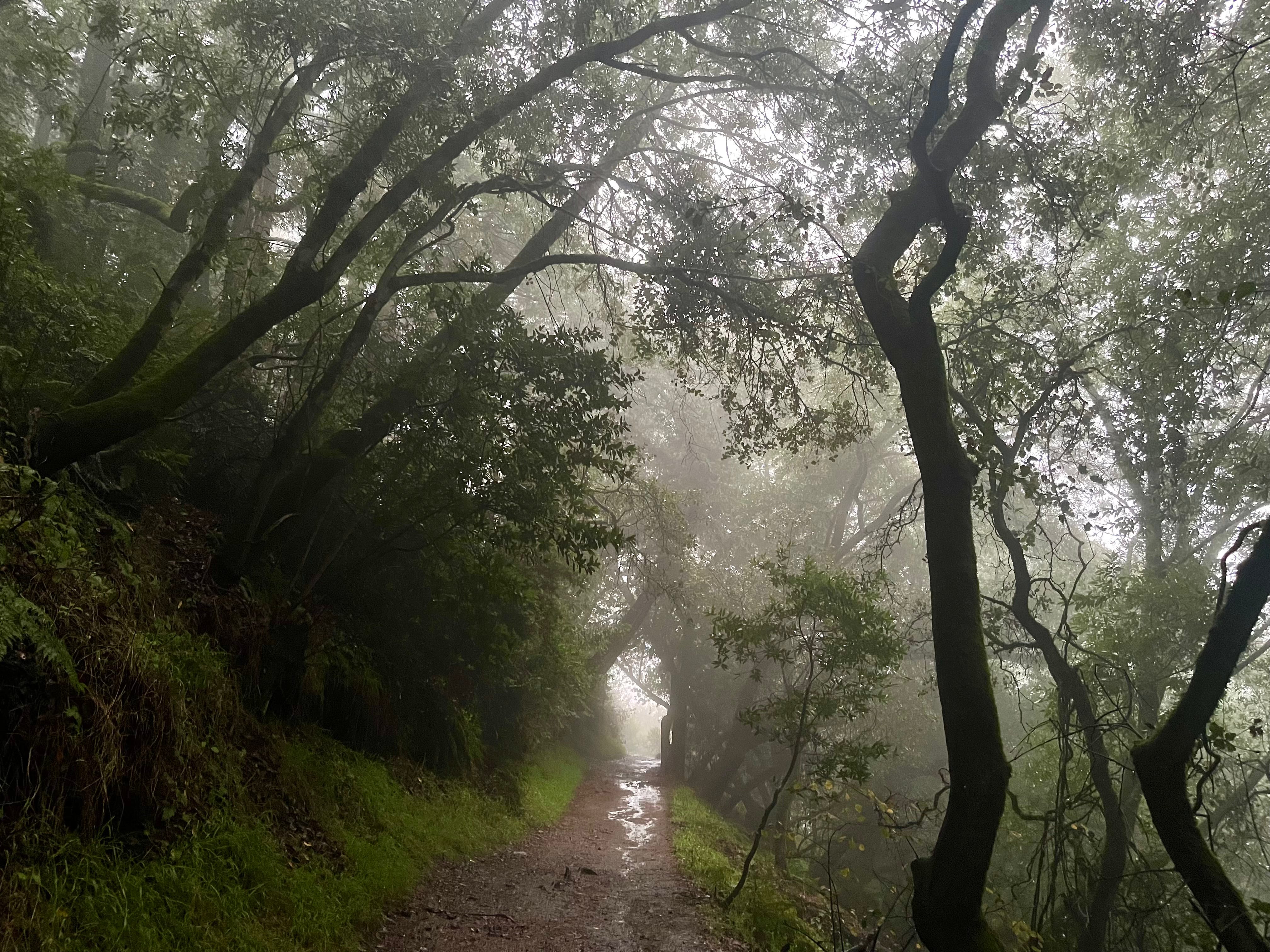
We humming humans are the other half of the breath of trees. We inhale their exhaled oxygen and they inhale our exhaled carbon dioxide. In this way, flora and fauna—together—make up one of the Earth’s many breaths. We all know this, but how often do you feel this breath? How often do you pause beside a tree to knowingly breathe together with that sky-swaying, earth-embracing, and bumpy bark-clad being?
Oh, what does the shared breath of humans and trees matter when there is war, genocide, inhumane treatment of people, degradation of nature, iniquity, greed, theft, and lies to cover up the egregious acts that unfurl every single day? It is for these very reasons that it now matters more than ever to consciously share breath with trees—those wise, patient, ever-standing, ever-generous, ever-seeking-toward-light, ever-redirecting-around-obstacles beings.
With intensified awareness, could you, Fellow Human, breathe in not just the life-giving oxygen of our deeply rooted cousins, but also their way of being? How might that change you? And how might those changes then ripple out into the rest of our messy human family?
And might you, Fellow Human, in return, give the trees you breathe with not just carbon dioxide, but also a heart-ful, humble hum?
Support for these times:
Regulate your breath and tune your body to the ever-changing flow of nature in my low-cost, all-levels Qigong classes (online & in Olympia, WA).
We are living in painful times, but we all have medicine within us. Writing is one way to access our inner medicine. Once on the page, that medicine can be a balm to both ourselves and others.
Love Letters to Humanity Community Spotlight
Art can be the torch that guides us and the balm that mends us through dark and injurious times.
Each month, meet an artist whose work has lit and mended my heart.
Over the course of many years, I watched Kristy Lin Billuni develop a moment in American history (the night Teddy Roosevelt and John Muir disappeared together in the wilderness) into a story, which evolved into a play, which blossomed into a fabulously queer musical about trees and humans.
RD: How has humanity broken your heart?
KLB: Humans break my heart by hurting each other, by hurting ourselves, by staying small, by refusing to reach.
RD: How is your work a form of love letters to humanity?
KLB: I aim to show examples of queer fearlessness and triumph, feminist champions, and the dangers of heternormative mediocrity.
RD: Please tell your fellow humans how to receive your love letters:
KLB: My eco-homo-erotic musical, The Trees, and my play, The Hortense Mancini Project, which will be read June 14 in SF (follow the link to get tickets)
Thank you for reading, Fellow Human! Here’s wishing you vibrant and vitalizing tree-infused breaths to brighten you in these dark times. To receive new posts and support my work, please consider sharing this post and/or becoming a free or paid subscriber. Find meditations and creative prompts below. <3 Rae
